

 RU
RU  PL
PL  DE
DE  RO
RO 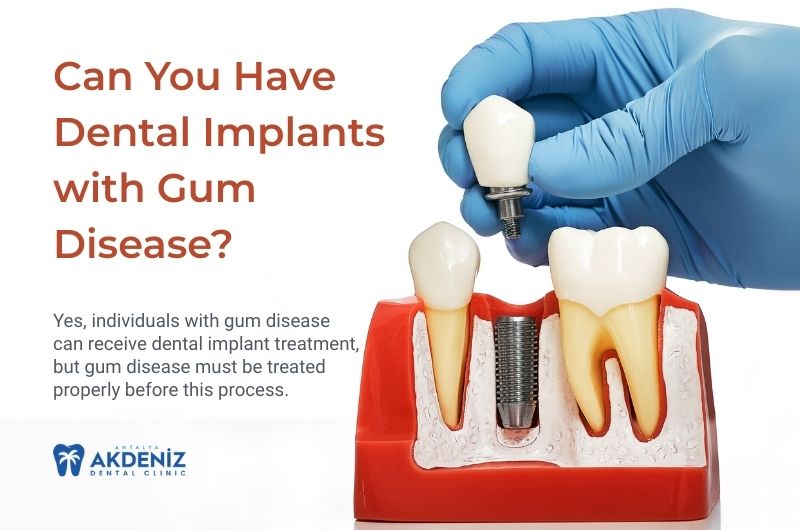
Can people with gum disease have dental implant treatment?
Tooth loss can be a nightmare for many of us. However, genetic factors, lifestyle habits and advancing age can all cause tooth loss. Fortunately, today's dental treatments, advanced techniques, and technologies help to ease this fear by offering almost perfect solutions to the problem.
After tooth loss, it is important to seek medical intervention to prevent bone loss and tooth shifting. For most of us, dental implants are the most successful option. The prosthesis is fixed, and after the healing process, the patient feels the implant as if it were their own tooth, which is why it is so successful.
However, for this treatment to be applicable, patients are expected to meet certain health criteria. One of these is that the patient's bone density and volume must be at a certain level. Another is that the patient's gums are healthy. Gum disease can prevent many dental solutions and treatments from being carried out. Therefore, preliminary treatments to eliminate gum disease must be carried out before almost all dental treatments and procedures.
So Can You Have Dental Implants with Gum Disease? Yes, individuals with gum disease can receive dental implant treatment, but gum disease must be treated properly before this process.
What is a dental implant?
A dental implant is an artificial tooth root with high biocompatibility. It is usually placed into the jawbone, and sometimes into the cheekbone, following tooth loss. This root prevents the shifting and displacement of your healthy teeth. It also prevents the erosion of the bone that your lost tooth was anchored to.
Dental implant treatment is a surgical procedure. However, thanks to the local anaesthetic applied beforehand, you will not experience any pain or sensitivity during the procedure. Once the implant has been placed through an incision, the first stage of the treatment is complete. Following this, there is a waiting period of approximately three months to allow for healing. This allows enough time for the implant to fuse with the bone and surrounding tissues. During this time, you will usually be fitted with a temporary fixed prosthesis that is lightweight but not very durable. This allows you to spend the waiting period more comfortably in terms of both aesthetics and functionality. Once the implant is firmly anchored to the bone and the surrounding tissues have encased it, the treatment will have largely succeeded. Your permanent fixed prosthesis will then be attached and secured to this artificial tooth root. Soon, you will be able to live your life with confidence with your prosthetic tooth, which will feel like your own and provide the most natural appearance possible.
What are gums? What is their function?
Gums are the pink, living tissue that surrounds the tooth root and the jawbone. They also cover the part of the tooth that is near the root. As well as helping teeth to attach to the jawbone and receive nourishment, gums also protect the teeth. They protect the tooth roots and jawbone from food debris, impact and bacteria, thereby reducing the risk of infection. At the same time, they ensure that the tooth roots are firmly anchored in the jawbone. Healthy gums are pink in colour. If they turn red or purple, this indicates that they have become unhealthy.
In addition to their functional benefits, gums are also important aesthetically. While they appear to complement healthy teeth, they actually play a primary role in dental health.
What is gum disease?
Another name for gum disease is periodontal disease. Gum disease is an infection of the living tissue that surrounds and protects the teeth. Although gum disease may seem simple, if left untreated it can progress to a serious condition that can lead to bone and tooth loss. Therefore, if you notice any symptoms, you should definitely consult a specialist dentist for early treatment. To prevent this bacterial and plaque-related condition, it is important to maintain careful and regular oral hygiene.
Gingivitis is the first stage of gum disease. At this stage, treatment and recovery are much easier. Symptoms include red, swollen gums and bleeding when you brush your teeth. Proper oral hygiene, which involves cleaning the plaque and removing bacteria from the teeth and gums, is sufficient to regulate the oral flora. At this stage, you will not experience bone or tooth loss. However, if the necessary interventions are not applied, the disease will progress to periodontitis.
Periodontitis is the next stage of gingivitis. At this stage, the gums recede, creating pockets between the teeth and gums. This exposes the jawbone and tooth roots to the external environment, enabling bacteria to spread to these areas. If left untreated, this can lead to tooth and bone loss. Symptoms indicating that your gum disease has reached this stage include heavy bleeding of the gums, redness of the gums, gum recession, formation of gaps between the teeth, and loosening of the teeth. The main causes are increased plaque, tartar and bacterial clusters due to poor oral hygiene. Other elements that trigger this condition include chronic conditions such as diabetes, smoking, and genetic factors.
What are the effects of gum disease on oral health?
Gum disease negatively affects oral health and, in advanced stages, can affect the whole body. Therefore, early diagnosis and treatment are important. Otherwise, treatment becomes increasingly difficult and may require a multidisciplinary approach.
Dental plaque and tartar indicate increasing bacterial clusters. They cause infection.
Gum bleeding increases and becomes more frequent.
This can lead to gum recession. This makes the teeth more vulnerable, as over time the gums can recede down to the tooth roots.
When the gums recede, the jawbone becomes exposed to external factors and undergoes resorption.
The tooth roots lose support as the gums recede, causing the teeth to loosen. This also negatively affects chewing function.
Intense bad breath develops. This is a result of the increased bacterial population.
Tooth loss can also occur.
Furthermore, due to the increased bacteria and infection, gum disease can also lead to cardiovascular disease, diabetes and premature birth.
Why are healthy gums important for dental implant treatment?
In light of all this information, the importance of gum health in implant treatment becomes much clearer.
During this procedure, the artificial root is surrounded by healthy tissue and firmly fuses with the jawbone. In other words, healthy gums enable the implant to integrate with your natural tissue and unite with the bone.
Healthy gums greatly minimise the risk of infection during this surgical procedure.
They also ensure that the expected healing process after the procedure is fast.
However, unhealthy gums can prevent the artificial root from anchoring securely, even if the implant is placed correctly. Therefore, a permanent result cannot be achieved.
Gum disease means infected gums. Implant treatment is a surgical procedure. If there is an infection at the initial stage, the opened gums provide an opportunity for the infection to spread. Opportunistic bacteria allow the disease to advance.
For these reasons, gum disease must be treated before implant treatment can begin.
FAQs
What if tooth loss occurred because of periodontal disease—can implants still be placed?
If you have lost a tooth due to gum disease, you can also have a dental implant. However, you must first undergo treatment for your gum disease. Implant treatment can only be performed once the area has healed. If your jawbone density and volume have decreased due to your gum disease, a bone graft may be necessary as a preliminary treatment.
What are the success rates of dental implants, and what factors influence them?
Dental implants are a treatment that should only be performed by specialist dentists in suitable clinical environments on patients whose health and living conditions are appropriate. Under these conditions, the success rate is between 90% and 98%. The success of the treatment depends on several factors, including the patient's attention to oral and dental hygiene, bone density and volume, the expertise and competence of the dental surgeon, the technique applied, completion of the expected follow-up visits after treatment and the suitability of the clinical conditions.
What pre-implant procedures might be necessary if gum disease has caused jawbone deterioration?
In this case, your gum treatment should be prioritised. Then, a bone graft should be used to increase the volume and density of your jawbone. Your gums should also be strengthened with a soft tissue graft. Once the desired strong bone and soft tissue have been achieved, implant treatment can be applied.