

 RU
RU  PL
PL  DE
DE  RO
RO 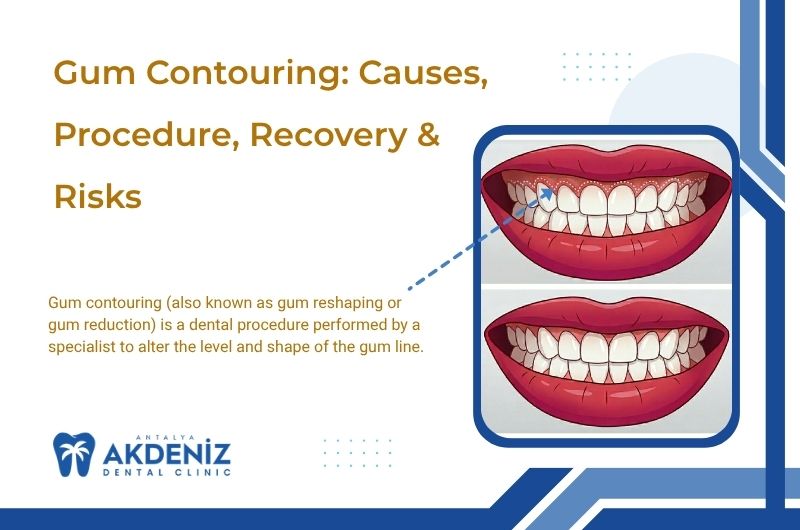
Gum contouring (also known as gum reshaping or gum reduction) is a dental procedure performed by a specialist to alter the level and shape of the gum line.
In which cases is gum contouring performed?
Aesthetic concerns and smile design
The most common use of gum contouring is for aesthetic improvements. Many patients opt for this method when they feel their smile is 'unbalanced.'
Gummy Smile:
This is performed when the gums are visible more than usual when smiling, making the teeth appear smaller than they are or 'boxy.'
Asymmetrical gum line:
When the gum line is higher on some teeth and lower on others, this causes the teeth to appear inconsistent in size. Contouring evens out this line to achieve a uniform appearance.
Teeth appearing smaller than they actually are:
Excess gum tissue covers the crown of the tooth, disrupting the aesthetic proportions of the teeth; by removing this tissue, the teeth's true size is revealed.
Medical and health requirements
Although it may appear to be a purely aesthetic procedure, gum contouring can sometimes become a medical necessity.
Gum diseases (periodontal issues):
When medication or deep cleaning is insufficient, this procedure may be recommended to reduce gum pockets and eliminate areas where bacteria can accumulate.
Removal of bacterial traps:
If there are 'pits' or areas in the gums that are difficult to clean, food debris accumulating there can lead to infection, abscesses, and even tooth loss. Contouring makes these areas accessible for cleaning.
Post-orthodontic treatment overgrowth:
Excessive gum tissue growth may be observed following orthodontic procedures such as the use of braces; this excess tissue is removed during the procedure.
Restorative and functional requirements
Gum contouring may serve as a preparatory step to ensure the success of other treatments to be carried out on the teeth.
Crown lengthening:
If the visible part of the tooth is insufficient to support a filling or crown (cap) due to tooth decay, fracture, or wear, the gum tissue is retracted to provide access to the tooth structure.
Preservation of biological width:
If restorations (fillings/crowns) are placed too close to the gum or below the gum line, this can lead to inflammation. This procedure creates a healthy space for the restoration margins.
Cases of missing teeth (hypodontia):
In some cases of congenital tooth absence, the gum line is repositioned to ensure aesthetic harmony between the existing teeth and any subsequent implants or bridges.
Genetic and structural factors
In some individuals, the condition of the gums is entirely due to genetic or structural causes.
Genetic predisposition:
Some individuals are born with thicker or more abundant gum tissue.
Lip and jaw structure:
Where the upper lip is excessively mobile (hyperactive) or the upper jaw is excessively developed vertically, gum contouring is used to mitigate the effects of this structural imbalance.
What is the gum contouring procedure?
Gum contouring is a procedure typically performed in a clinical setting by a periodontist or cosmetic dentist and takes approximately 1 to 2 hours. The procedure generally consists of the following steps:
Consultation and planning
The process begins with a detailed consultation during which your dentist discusses your aesthetic goals. At this stage, your dentist examines the condition of your gums; they check for any conditions requiring priority treatment, such as gum disease or tooth decay. Photographs may be taken to determine the gum-to-tooth ratio and assess lip position and facial structure, and a personalized treatment plan is drawn up.
Anaesthesia and preparation
Local anesthesia is administered to the gum area to ensure you do not feel any pain during the procedure. In some cases, sedation options may also be offered for your comfort. Once the anesthesia has taken effect, your dentist will use a special pen to mark where the new gum line will be.
Shaping the gum tissue
At this stage, your dentist reshapes the gum line by removing excess tissue. Two main tools are used in the procedure:
Soft tissue laser:
This is the most commonly preferred method today. As the laser cuts the tissue with great precision while simultaneously sealing the blood vessels (coagulation), bleeding is minimal, the risk of infection is low, and stitches are generally not required.
Traditional scalpel:
This is used particularly in more complex cases where more than 2 mm of tissue needs to be removed or in situations where the laser is not suitable. In this method, sutures may be required to hold the tissue in place.
Bone contouring (osseous contouring)
In some patients, it may be necessary to contour the small amount of bone tissue beneath the gums to ensure that the gums remain permanently in the desired position. If the bone level is too high and this step is omitted, there is a risk of the gums reverting to their previous state (relapse).
Finalisation and restoration
Once the gums have been shaped, the area is closed if sutures have been placed. In some cases, gum contouring is combined with additional aesthetic procedures, such as veneers or teeth whitening, to enhance the color and shape of the teeth.
What is the recovery process like after gum contouring?
The recovery process following gum contouring generally takes a week or less, depending on the method used and your body's healing rate. However, the process of full tissue healing and the result settling in may take days or weeks.
The recovery process is as follows:
The First Few Days and General Activity
- Rest: It is recommended that you limit your activities and rest on the day of the procedure. Most patients are able to return to work or school within 1 to 2 days.
- Numbness and tenderness: The effects of the local anesthetic wear off within a few hours, after which you may experience mild soreness or tenderness.
- Exercise: You should avoid strenuous exercise that increases your heart rate and heavy lifting for the first 5 days, as this can increase bleeding, swelling, and pain.
Nutrition and Diet
To speed up the healing process, soft and lukewarm or cold foods should be consumed for the first few days (usually 2-3 days).
- Recommended: Foods that do not irritate the gums, such as yogurt, eggs, pasta, boiled vegetables, apple purée, jelly, and ice cream, are suitable.
- Foods to avoid: For approximately one week, you should avoid hard, crunchy, spicy, and very hot foods.
- Seeded fruits: Foods with small seeds, such as kiwi, strawberries, popcorn, or poppy seeds, must not be consumed under any circumstances, as they can become lodged beneath the healing gum and cause infection.
Oral care and hygiene
- Cleaning: It is very important to follow the specific brushing instructions recommended by your dentist. You should brush your teeth very gently and use dental floss carefully.
- Mouthwashes: Alcohol-free mouthwashes or antibacterial solutions recommended by your doctor can be used to prevent bacterial build-up.
- Saltwater: A saltwater gargle prepared by adding a teaspoon of salt to a glass of warm water is an ideal method for clearing the mouth of food debris after meals.
Pain Management and Symptoms
- Medication: Over-the-counter painkillers such as paracetamol or ibuprofen can be used to relieve discomfort. However, aspirin is generally not recommended, as it carries a risk of increasing bleeding.
- Normal symptoms: It is natural to experience slight swelling or 'scabbing' (shedding of healing tissue) in the area during recovery, and this does not affect the final appearance.
- Difference in method: As the tissue is sealed (cauterized) in laser procedures, the risk of bleeding and infection, as well as the recovery time, is significantly lower than with the surgical method (scalpel).
Long-term follow-up
Your dentist will usually schedule a follow-up appointment a few days or a week after the procedure to check on your recovery. It can take approximately 8 to 12 weeks for the gums to fully adapt to their new shape and for it to become clear whether the result will remain stable. If aesthetic restorations such as porcelain veneers are to be fitted, it may sometimes be necessary to wait up to 6 months to eliminate the risk of gum recession.
Are there any risks associated with gum contouring?
Gum contouring is a very safe procedure when performed by a qualified dentist or periodontist. However, as with any surgical procedure, there are some rare risks and side effects associated with this procedure.
Possible risks and complications include:
Risk of infection and healing complications
As with any surgical procedure, there is a risk of infection developing following the procedure. Increased pain in the gums, excessive swelling, or discharge may be signs of infection. Furthermore, during the healing process, small-seeded foods such as kiwi or corn can become lodged beneath the gum line, which may complicate the healing process and lead to complications.
Regrowth of the gum tissue (Relapse)
One of the most common risks is the gum tissue returning to its original position over time. This typically occurs when the underlying bone tissue has not been sufficiently reshaped. The body may sometimes regenerate the tissue to maintain its natural width; therefore, ensuring the bone level is correctly adjusted is crucial for long-term results
Aesthetic and functional side effects
Following the procedure, aesthetic gaps known as 'black triangles' may form between the teeth. Other possible functional risks include:
- Root sensitivity: This may occur as a result of the gum tissue receding and exposing the root surface.
- Resorption: In rare cases, tissue loss may occur in the tooth root.
- Temporary tooth mobility: Temporary loosening of the teeth may be observed following the procedure.
Violation of the biological width
Interference with the protective space known as the 'biological width' between the gum line and the bone may lead to chronic gum inflammation, gum recession, bone loss, and the formation of pockets in the area.
F.A.Q:
Is gum contouring painful?
As the procedure is performed under local anesthetic, no pain is felt. There may be some sensitivity after the procedure, but this is usually mild.
Is a laser or a scalpel preferred for gum contouring?
Laser treatment results in less bleeding, faster healing, and a lower risk of infection; it is frequently preferred nowadays.
How long does it take to recover from gum contouring?
Full recovery usually takes about one week. Mild swelling and sensitivity for the first 2-3 days are normal.
Will the roots of my teeth be exposed?
An experienced dentist will only remove excess tissue, preserving the root surface. However, sensitivity is possible if too much tissue is removed.
How long does a gum contouring procedure take?
It usually takes between 30 and 60 minutes; this depends on the number of areas to be treated.
Is gum contouring permanent?
Yes, the removed tissue does not grow back. However, changes may occur following conditions such as gum disease or the use of certain medications.
Who is gum contouring not suitable for?
It is not recommended for those with active gum inflammation, uncontrolled diabetes, bleeding disorders, or pregnant women.
Does it cause gum recession?
No, on the contrary, as excess tissue is removed, the risk of recession is reduced in some cases. Rarely, recession may be triggered if proper planning is not carried out.
Is it carried out over multiple sessions?
Most cases are completed in a single session. Two sessions may be required for very large areas.
Can braces be fitted after gum contouring?
Yes, but it is recommended to start treatment once healing is complete (approximately 4-6 weeks).
Are there alternative treatments to gum contouring?
Crown lengthening (surgical), orthodontic smile design, or Botox (for the upper lip in cases of a 'gummy smile') may be alternatives.