

 RU
RU  PL
PL  DE
DE  RO
RO 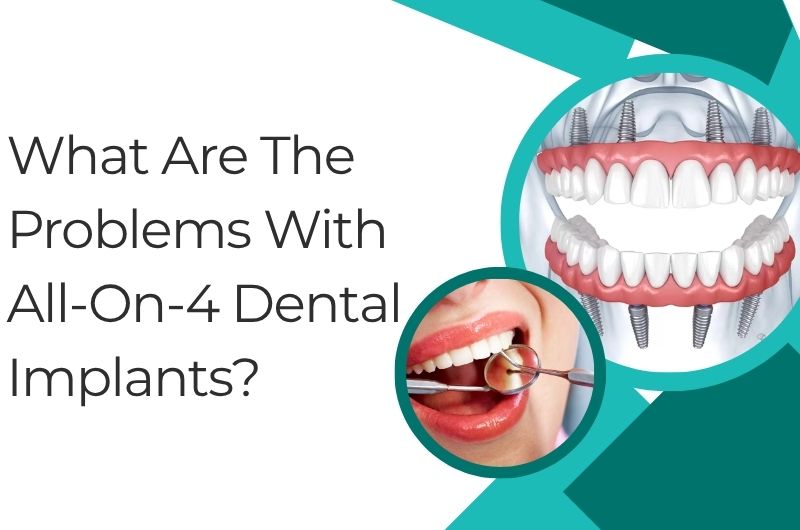
What are the problems with all-on-4 dental implants?
All-on-4 dental implants may have some potential problems and complications. First of all, it should be known that problems rarely occur in the treatment of all on 4 dental implants as long as it is applied by an experienced dentist.
Potential problems of All-on-4 dental implants and situations where an experienced surgeon with a good clinic can minimize these problems:
Implant failure (osseointegration problems):
- Failure of implants to integrate sufficiently with the bone can lead to loosening or loss of the implant. This can be caused by factors such as insufficient bone density, poor oral hygiene or smoking.
- A good clinic performs a detailed bone analysis (such as 3D tomography) and assesses the appropriate bone density before treatment. An experienced surgeon can plan the implant placement precisely, increasing the success of osseointegration.
Infection and peri-implantitis
- Bacterial buildup around the implant can lead to infection or an inflammatory condition called peri-implantitis. This can lead to the loss of the implant.
- A good clinic operates in a sterile environment and adheres to high hygiene standards in surgical procedures. An experienced surgeon places the implant using the correct techniques and provides the patient with a comprehensive guide to oral hygiene. The risk of infection is detected and managed early through regular checkups.
Problems with the prosthesis:
- Mechanical problems such as cracking, fracture, or loosening of screws can occur with fixed prostheses used in the All-on-4 system. It can also be a problem if the prosthesis does not satisfy the patient aesthetically or functionally.
- A quality clinic uses durable and aesthetic materials (e.g., zirconium or high-quality acrylic). An experienced surgeon ensures that the denture fits correctly and works closely with dental technicians to design the denture. A good clinic customizes denture fit and aesthetics according to patient needs.
Bone and gingival problems
- Insufficient bone volume or gingival recession can affect the stability of implants. Although All-on-4 has an advantage in patients with little bone volume, additional bone grafting may be required in some cases.
- A good clinic will perform detailed pre-treatment planning and recommend additional procedures such as bone grafting or sinus lift if necessary. An experienced surgeon will ensure the longevity of the implants by optimizing the use of available bone.
Nerve damage or pain
- Incorrect implant placement can cause nerve damage or chronic pain, especially in the lower jaw.
- A good clinic precisely locates the nerves using advanced imaging techniques (such as CBCT). An experienced surgeon places the implants at a safe distance from the nerves and minimizes the risk of complications.
Aesthetic and functional problems
- Functional problems such as unnatural appearance of the prosthesis, speech or chewing problems may disturb patients.
- A quality clinic designs prostheses in accordance with the patient's facial structure and aesthetic expectations. An experienced surgeon ensures that the prosthesis is both aesthetic and functional by planning the angle and position of the implants correctly.