

 RU
RU  PL
PL  DE
DE  RO
RO 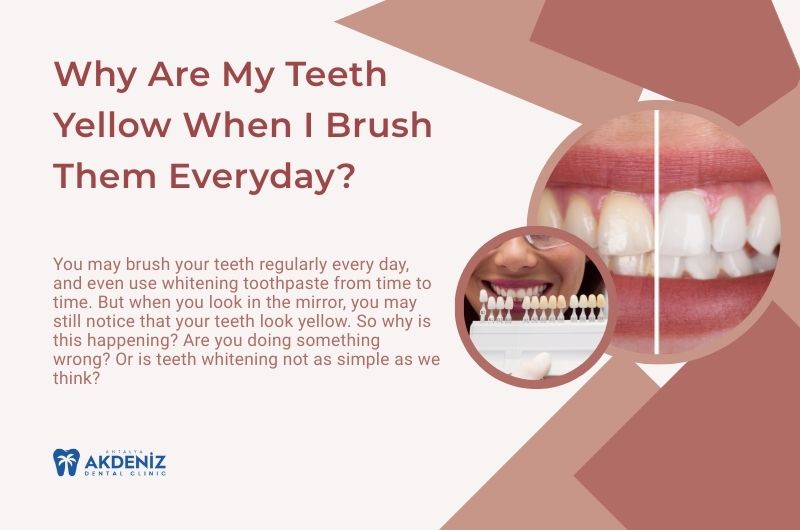
Most of us brush our teeth twice a day, and we've even tried whitening toothpaste. But sometimes, when we look in the mirror, we still notice that our teeth are yellow. Why does this happen? Are we doing something wrong? Or are there different ways to whiten our teeth?
First, let's clarify this: 'The more you brush, the whiter your teeth will be' is not entirely true. Brushing can only remove simple stains on the surface. It does not do more than that. In fact, brushing too hard can damage tooth enamel and lead to sensitivity and gum recession in the future.
Even if some people brush their teeth very well, that yellow tint may not completely disappear. This is where the actual cause of tooth color comes into play. Without knowing what determines tooth color, it is difficult to understand why they turn yellow.
Why do our teeth look yellow?
Our teeth actually consist of two main layers. The outermost layer, called enamel, is naturally white. Underneath it is a tissue called dentin, which has a yellowish tone. If your enamel is naturally thin, that yellow dentin color becomes more apparent. This is why some people's teeth appear more yellow from childhood. Just like our eye, hair, or skin color... it is entirely genetic and actually a completely natural condition.
As we age, our teeth may become slightly darker because the enamel wears away over time. This is why teeth that appear more “milky” in infancy may appear more yellowish in adulthood.
Staining caused by external factors (Extrinsic staining)
These stains adhere to the surface of the teeth later on.
The most common causes:
- Coffee, tea, wine, cola, sauces, colored foods
- Cigarettes and tobacco products
- Inadequate brushing or not using dental floss
- Long-term use of chlorhexidine-containing mouthwashes
You don't have to give them up completely. Even these small habits can make a difference:
- Drink colored beverages through a straw
- Rinse your mouth with water after eating
- Wait at least 30 minutes before brushing (especially after acidic drinks)
Staining caused by the internal structure of the tooth (Intrinsic staining)
These stains are embedded within the tooth and cannot be removed by brushing.
Some causes:
- Excessive fluoride intake during childhood (fluorosis)
- Dental trauma
- Materials used after root canal treatment
- Certain medications (such as tetracycline)
- Fluorosis is a particularly common condition.
Fluoride is a great protector against tooth decay, but too much of it can affect enamel development and leave permanent yellow-brown stains. Therefore, when children brush their teeth:
- Use a pea-sized amount of toothpaste,
- Spit after brushing,
- Adult supervision
is very important.
Genetics
Hereditary defects or metabolic disorders can also influence natural tooth colour.
As you can see, tooth colour is influenced by many factors. Teeth may be yellow but completely normal, yellow due to external or internal stains, or yellow because of genetic conditions. Identifying the correct reason is important to treat discoloration effectively and prevent it from recurring.
Is treatment possible? Yes!
There are many options available in dentistry for yellowing teeth:
- Teeth whitening (bleaching)
- Resin infiltration for mild fluorosis
- Composite fillings or veneers
- Ceramic veneers or crowns for more severe cases
The cost, durability, aesthetic outcome, and potential side effects of each treatment vary. Therefore, the most appropriate choice can only be determined following a dental examination.
The most important thing to remember
White teeth do not necessarily mean healthy teeth.
Most healthy natural teeth have a slightly yellowish tint.
Frequently whitening your teeth, or even trying unknown products purchased online, can cause permanent enamel damage. Treatments using unreliable products can irreversibly weaken your teeth.
It is certainly possible to enhance your smile;
but it must be done consciously, safely, and professionally.